The Hidden Power of Seagrass: Restoration, Resilience and Collaboration


Natural Capital Ireland’s Involvement in Seagrass Restoration
Natural Capital Ireland (NCI) plays an active role in advancing seagrass restoration through its partnership in the Interreg North-West Europe (NWE) REBORN project, an ambitious international initiative focused on scaling up the recovery of vital coastal ecosystems.
Seagrass meadows, found in Ireland’s estuaries and coastal waters, are among the most valuable yet threatened marine habitats. They provide essential ecosystem services, including carbon sequestration, biodiversity support, and coastal protection. Despite occupying only a small fraction of the seafloor, seagrass ecosystems store a disproportionately large share of ocean carbon and serve as nursery grounds for fish, as well as feeding habitats for bird species such as the light-bellied Brent goose in Dublin Bay.

Through REBORN, NCI collaborates with a consortium of eleven partners across five European countries to address the continued decline of seagrass. The project responds to key challenges such as habitat degradation, fragmented expertise, and limited public awareness, all of which have hindered restoration efforts to date.
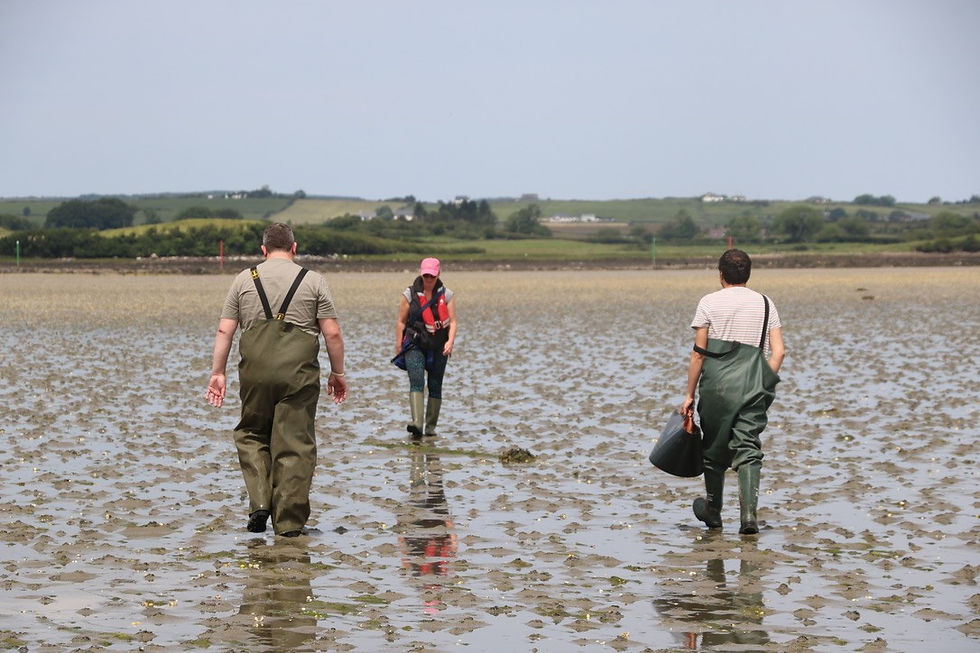
A key ambition of the REBORN project is to move beyond small, isolated initiatives by developing a replicable and scalable model for seagrass restoration across North-West Europe. Pilot sites (including Killala Bay in Ireland) serve as testing grounds for new approaches that can later be adapted and implemented in other regions.
Importantly, NCI’s involvement builds on and connects with a broader ecosystem of Irish research and community initiatives, including projects led by the University of Galway and citizen science programmes such as Coastwatch. This collaborative approach strengthens Ireland’s capacity to restore seagrass while contributing to wider European efforts to enhance marine resilience.

On 16 June, REBORN partner University of Galway hosted an event to premiere the documentary Seagrass: The Hidden Life Beneath Our Shores (created by Zero Waste Alliance Ireland and directed by Órla Coutin Fitzsimons) alongside the launch of the illustrated poster Seagrasses and Ditchgrasses of Europe (Dr. Liam Morrison, Dr. Juan Lugilde Yáñez, Africa N.G. D., José Martínez-Garrido, Dr. Sara Haro Paez and Dr. Ricardo Bermejo, with illustrations by V. González-Ortiz) in the University of Galway. The event brought together voices from marine science, policy, education and environmental action, offering an inspiring exploration of one of Ireland’s most vital, yet often overlooked, marine ecosystems.
Among the speakers was Dr Richard J. Lilley of the University of Groningen, REBORN partner and Chair of the European Seagrass Restoration Alliance, who shared insights on the future of seagrass restoration in Europe and the growing importance of collaborative efforts to restore and protect these critical coastal habitats.

Shedding Light on a Hidden Ecosystem
The Zero Waste Alliance Ireland's documentary Seagrass: The Hidden Life Beneath Our Shores (directed by Órla Coutin Fitzsimons) places Ireland’s seagrass meadows centre stage, revealing their ecological importance and the urgent need to protect and restore them. These underwater habitats play a critical role in supporting biodiversity, improving water quality, stabilising sediments and storing blue carbon, yet they remain largely invisible beneath the surface.

Narrated by Jack O’Sullivan, the film features contributions from our REBORN partner members Dr. Liam Morrison (Lecturer, School of Natural Sciences, Earth & Ocean Sciences, University of Galway) and Dr. Juan Lugilde Yáñez, alongside Professor Frances Fahy, Director of the Ryan Institute at the University of Galway. Their insights bring scientific depth while highlighting the human stories behind research and conservation efforts.
The film was filmed, written, produced and directed by Órla Coutin Fitzsimons, with the support of Zero Waste Alliance Ireland. It is a collaborative effort between Zero Waste Alliance Ireland and Dr. Liam Morrison and Dr. Juan Lugilde Yáñez of the Ryan Institute, University of Galway.
Audiences also heard directly from Órla Coutin Fitzsimons, Jack O’Sullivan and Dr. Liam Morrison, who shared reflections on the making of the film, offering a fascinating behind-the-scenes perspective on how science, storytelling and visual media can combine to drive awareness and action.
The documentary is further enriched by footage generously provided by Ken O’Sullivan (Sea Fever Productions Ltd.), Rob Monaghan (Seabed Sanctuary), and Mark McClean (Blue Hare Films), adding visual depth to this compelling narrative.
Watch the documentary here:
Launch of the Seagrasses and Ditchgrasses of Europe Poster

Alongside the film premiere, the event marked the official launch of the Seagrasses and Ditchgrasses of Europe poster, an illustrated guide to the diversity of seagrass and ditchgrass species found across Europe’s Atlantic and Mediterranean regions.
The poster showcases key species including Zostera marina, Nanozostera noltei, Cymodocea nodosa, Posidonia oceanica, Halophila stipulacea (invasive), Ruppia maritima, Ruppia cirrhosa and Ruppia drepanensis. Together, these species form complex and vital ecosystems that underpin coastal biodiversity and resilience.
Developed by a collaborative team of researchers, the poster was co-authored by Dr. Liam Morrison, Dr. Juan Lugilde Yáñez, Africa N.G. D., José Martínez-Garrido, Dr. Sara Haro Paez and Dr. Ricardo Bermejo, with illustrations by V. González-Ortiz. It serves as both a scientific resource and an accessible educational tool, helping make these often-overlooked habitats more visible and better understood.
By pairing detailed scientific knowledge with striking visual representation, the poster complements the documentary’s message, emphasising the importance of awareness as a foundation for conservation and restoration.

A Shared Commitment to Action
Both the documentary and the poster highlight the power of collaboration across science, education, creative media and policy. They provide vital tools to increase awareness of seagrass ecosystems, not only in Ireland but across Europe, and to inspire meaningful conservation action.
A sincere thank you to everyone involved in bringing this work to life, including Órla Coutin Fitzsimons, Jack O’Sullivan, Jack Coffey, Dr. Liam Morrison, Dr. Juan Lugilde Yáñez, Dr. Richard Lilley, Prof. Frances Fahy, Clémence Gacon, Deirdre Lane, Ricardo Bermejo, Africa N.G. D., Sara Haro Paez, Zero Waste Alliance Ireland, and the wider teams and partners who made both the documentary and poster possible.

For more updates on the Interreg NWE REBORN Project, follow our LinkedIn page and sign up to NCI's monthly newsletter. REBORN will continue until 30th June 2029 and we hope it will deliver lasting impact for seagrass in Ireland. Learn more about REBORN Interreg North-West Europe here.